Everyday Home Solutions
Best Non-Slip Rug Pads for Hardwood Floors, Tile, and Carpet
The best non-slip rug pads match the flooring beneath the rug, the rug’s backing, and the room’s clearance needs. Compare thin grip pads, felt-and-rubber pads, and carpet-to-carpet pads before you buy.
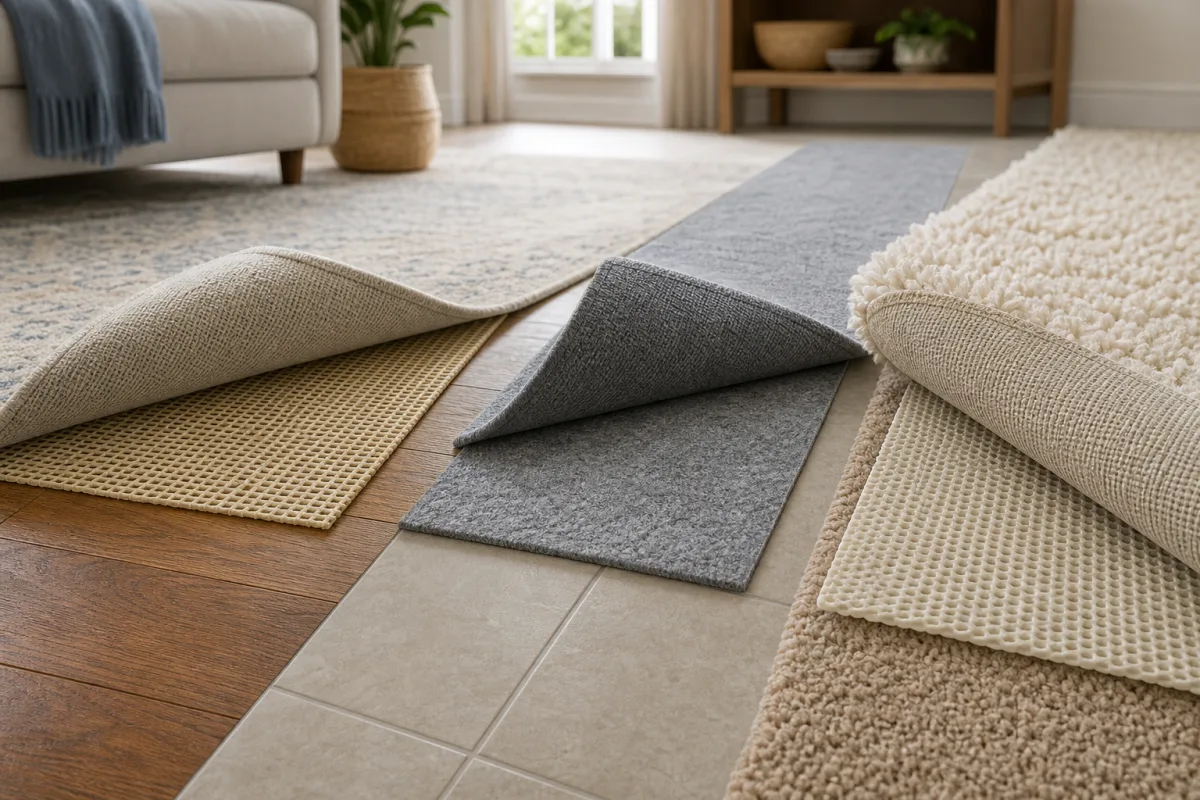
A non-slip rug pad can help an area rug stay more stable, lie flatter, and feel more cushioned. The best non-slip rug pads are not a one-material-fits-all purchase: the right option depends on the floor surface, rug backing, rug size, foot traffic, and door clearance.
Start by choosing a pad that is specifically labeled for the surface below it. A pad intended for sealed hardwood may not be appropriate for vinyl, laminate, natural stone, or wall-to-wall carpet. Then decide whether you need basic grip, added cushioning, or both.
Safety note: A rug pad can reduce sliding, creeping, and bunching, but it cannot eliminate every slip or trip risk. Replace or reposition rugs and pads that curl, wrinkle, deteriorate, or continue to shift. The CDC also recommends removing or securing loose rugs as part of reducing fall hazards at home. CDC fall-prevention guidance
Quick Pick: Which Rug Pad Type Is Best?
| If you have... | Best starting pad type | What to verify |
|---|---|---|
| A small rug or runner on a compatible hard floor | Thin rubber or grip pad | Floor-finish compatibility and low door clearance |
| A large, thin area rug on a compatible hard floor | Felt-and-rubber pad | Thickness, furniture stability, and floor compatibility |
| A rug over wall-to-wall carpet | Carpet-to-carpet pad | That it is designed specifically for broadloom carpet |
| Vinyl, laminate, specialty-finish wood, or stone | Product labeled for that exact surface | Flooring manufacturer restrictions and pad instructions |
| A bathroom mat | Washable bath mat with suitable backing | Cleaning instructions and moisture management |
Why Use a Non-Slip Rug Pad?
Lightweight rugs, runners, and accent rugs may shift when people walk across them, especially on smooth flooring or in busy pathways. A properly sized pad can help keep the rug more consistently positioned.
Depending on its design, a rug pad may also provide:
- Improved stability: Helps reduce sliding, creeping, and bunching.
- Cushioning: Adds comfort under thin or flatwoven rugs.
- Rug support: Creates a layer between the rug backing and the floor.
- A cleaner installation: Can help the rug lie flatter and reduce visible ripples.
- A buffer for debris: Makes it easier to lift the rug and clean away grit that may collect underneath.
A pad is not a fix for every rug problem. Severely curled corners, a damaged backing, persistent wrinkling, or a rug that is too small for a high-traffic route can remain a tripping concern even with a pad underneath.
How to Choose the Best Non-Slip Rug Pad
Confirm Floor and Rug Compatibility
Read the product label, installation directions, and your flooring-care instructions before buying. Look for language such as “safe for,” “compatible with,” or “recommended for” your floor type.
This step matters most for:
- Sealed hardwood and recently refinished wood floors
- Luxury vinyl plank, sheet vinyl, and laminate
- Natural stone, tile, and floors with specialty sealants
- Radiant-heated floors
- Wall-to-wall carpet
- Rugs with latex, rubber, jute, or other specialized backings
Flooring manufacturers may set limits on rug backings, cleaners, or coverings. For example, Shaw Floors advises owners to follow product-specific care guidance for their flooring. When a pad’s suitability is unclear, contact the flooring manufacturer or test the product in an inconspicuous location before placing it under a large rug. Shaw Floors care and maintenance guidance
Choose the Right Size
The rug pad should sit inside the rug perimeter rather than extending to the edge. This keeps the pad out of view and helps avoid creating a raised border.
Measure the actual rug before ordering. For trim-to-fit pads, cut slowly and leave a visible rug border on every side. During installation, smooth the pad and rug outward from the center to remove folds and ridges.
Match Thickness to the Room
Thickness affects comfort, door clearance, furniture placement, and transitions between rooms.
- Choose a thin pad for runners, flatweave rugs, doorways, and low-clearance areas.
- Choose a dense felt-and-rubber pad for a thin area rug that needs more support and cushioning, if the floor is compatible.
- Choose a low-profile carpet-to-carpet pad when layering an area rug over broadloom carpet.
Before buying, check whether a thicker pad could interfere with a swinging door, make furniture less stable, or create an awkward transition near stairs or adjoining flooring.
Best Non-Slip Rug Pads for Hardwood Floors
For hardwood, choose a rug pad specifically labeled for your floor finish. “Rubber” or “felt” alone does not confirm that a product is appropriate for all wood floors, especially if the floor is newly finished, specialty-coated, or covered by a warranty.
Keep moisture and grit from remaining under the rug. Periodically lift the rug to inspect the floor and pad for dampness, residue, discoloration, or trapped debris.
Thin Rubber or Grip Pads
Thin grip-focused pads are often a practical starting point for small rugs, kitchen runners, and entry rugs where added height is undesirable. Their suitability varies by formulation and floor finish, so use only a product that states it is safe for sealed hardwood.
Felt-and-Rubber Pads
Felt-and-rubber pads combine cushioning with a grippy layer. They are often useful beneath larger rugs when the product is compatible with the floor and its thickness will not affect doors, furniture, or room transitions.
Pad orientation varies by product. Follow the manufacturer’s directions rather than assuming which side should face the floor.
Hardwood Care Reminders
- Sweep or vacuum before installing the pad.
- Clean up spills promptly and do not leave a damp rug on the floor.
- Lift rugs periodically in entryways, near exterior doors, and in pet areas.
- Replace pads that crack, flatten unevenly, shed material, or leave residue.
Best Rug Pads for Tile and Other Hard Floors
Tile, porcelain, ceramic, stone, vinyl, and laminate vary in texture, coatings, and moisture exposure. These differences affect both how a rug moves and which pad materials are appropriate.
For compatible hard floors, a thin grip pad can work well under a small rug or runner. A felt-and-rubber pad may be a better choice for a larger area rug when added cushioning is wanted. In either case, the product label should identify the intended flooring surface.
Kitchens, Entryways, and Bathrooms
Moisture, tracked-in grit, and cleaning residue need extra attention in these locations. Install a rug pad only on a clean, fully dry surface, and lift the rug regularly to check beneath it.
Use these basic maintenance steps:
- Sweep or vacuum the floor before installation.
- Make sure both the floor and the rug are completely dry.
- Dry spills promptly instead of allowing moisture to remain beneath the rug.
- Lift the rug periodically to remove sand, dust, and pet hair.
- Replace the pad if it no longer lies flat or loses its ability to hold the rug in place.
For bathrooms, a washable bath mat designed for wet locations may be a better fit than an area rug plus pad. Follow the bath mat and flooring manufacturer’s cleaning instructions.
Vinyl, Laminate, Stone, and Specialty Finishes
These surfaces can have product-specific restrictions. Vinyl and laminate manufacturers may limit certain backing materials, while natural stone may be sealed, unsealed, polished, or textured.
Select a pad explicitly labeled for the floor, particularly if the flooring is new, heated, specialty-finished, or under warranty. If the label is vague, do not rely on general material descriptions alone.
Best Non-Slip Rug Pads for Carpet
An area rug placed over wall-to-wall carpet needs a dedicated carpet-to-carpet rug pad. A pad made to grip smooth hard flooring is not automatically suitable for carpet fibers or a carpeted surface.
Carpet-to-carpet pads are designed to help reduce creeping and wrinkling while keeping the layered setup relatively low profile.
Good Uses for Carpet-to-Carpet Pads
A low-profile carpet-to-carpet pad may help with:
- Lightweight decorative rugs over broadloom carpet
- Area rugs in bedrooms and living rooms
- Runners over low- or medium-pile carpet
- Layered-rug arrangements where extra height would be inconvenient
When a Pad May Not Be Enough
Very plush carpet, a very lightweight rug, a slick backing, or an undersized pad can still allow movement. If the rug continues to creep or wrinkle, confirm that the pad is designed for your carpet pile and rug backing, check the pad size, or move the rug away from a busy traffic path.
Rug Pad Materials Compared
Material categories are helpful, but construction and stated floor compatibility matter more than the material name alone.
| Rug pad type | Typical strengths | Potential limitations | Best starting use |
|---|---|---|---|
| Thin rubber or mesh grip pad | Low profile and basic traction | Little cushioning; compatibility varies | Small rugs and runners on compatible hard floors |
| Felt pad | Adds density and cushioning | May not provide enough grip by itself | Large rugs when paired with an appropriate non-slip layer |
| Felt-and-rubber pad | Combines cushioning and grip | Adds more height than a thin pad | Larger area rugs on compatible hard floors |
| Natural-rubber pad | Often available in thin grip-focused styles | Formulation and finish compatibility vary | Runners and lighter rugs on compatible surfaces |
| Carpet-to-carpet pad | Helps reduce creeping over broadloom | Not a universal hard-floor solution | Area rugs over wall-to-wall carpet |
What to Check Before You Buy
Use this checklist when comparing the best non-slip rug pads for your home:
- Is the pad labeled for your exact floor type?
- Does your flooring maker restrict certain pad materials or rug backings?
- Is the pad smaller than the rug, or can it be trimmed to fit?
- Will its thickness affect doors, furniture, robot vacuums, or flooring transitions?
- Does the rug need grip, cushioning, or both?
- Is the pad designed for the rug backing and the surface below it?
- Are there instructions for radiant heat, cutting, cleaning, and ventilation?
- Can you return the product if it is unsuitable before trimming it?
For a small accent rug, a thin compatible grip pad may be enough. For a large, thin living-room rug, a compatible felt-and-rubber pad may offer more support. For an area rug over carpet, begin with a purpose-made carpet-to-carpet pad.
Installation and Maintenance Tips
Install on a Clean, Dry Surface
Sweep or vacuum the area, then make sure the floor is dry. Center the pad beneath the rug, leave a border around the edges, and smooth both layers to remove folds, bubbles, ridges, and raised corners.
Inspect the Rug and Pad Regularly
Lift the rug periodically, especially in high-traffic or moisture-prone areas. Check for:
- Trapped sand, dust, or pet hair
- Dampness, spills, or cleaning residue
- Cracking, flattening, or breakdown of the pad
- Changes to the floor surface
- Bunching, curled edges, or continued rug movement
If the rug keeps moving after installation, do not treat the pad as a complete solution. Recheck pad type, dimensions, floor compatibility, rug backing, and placement. Replace a damaged rug or pad rather than trying to secure a product that no longer lies flat.
Choose the Floor Surface First, Then the Features
The best non-slip rug pad begins with the surface beneath it. For sealed hardwood, choose a floor-compatible product and inspect beneath the rug regularly. For tile and other hard floors, consider texture, sealants, and moisture. For wall-to-wall carpet, use a dedicated carpet-to-carpet pad.
After confirming compatibility, select the thickness and construction that fit your rug size, traffic level, comfort preference, and clearance needs. A properly sized, well-maintained pad can help a rug stay flatter and more stable, but regular inspection remains important.
Sources
- Centers for Disease Control and Prevention, Older Adult Fall Prevention
- Shaw Floors, Floor Care and Maintenance
- U.S. Consumer Product Safety Commission, Home Safety