Seasonal Home Care
Where to Buy Pet-Safe Ice Melt for Concrete, Pets, and Plants
Compare local and online options for ice melt, then use the product label to check surface guidance, pet-use precautions, plant-related warnings, temperature range, and application rates before you buy.
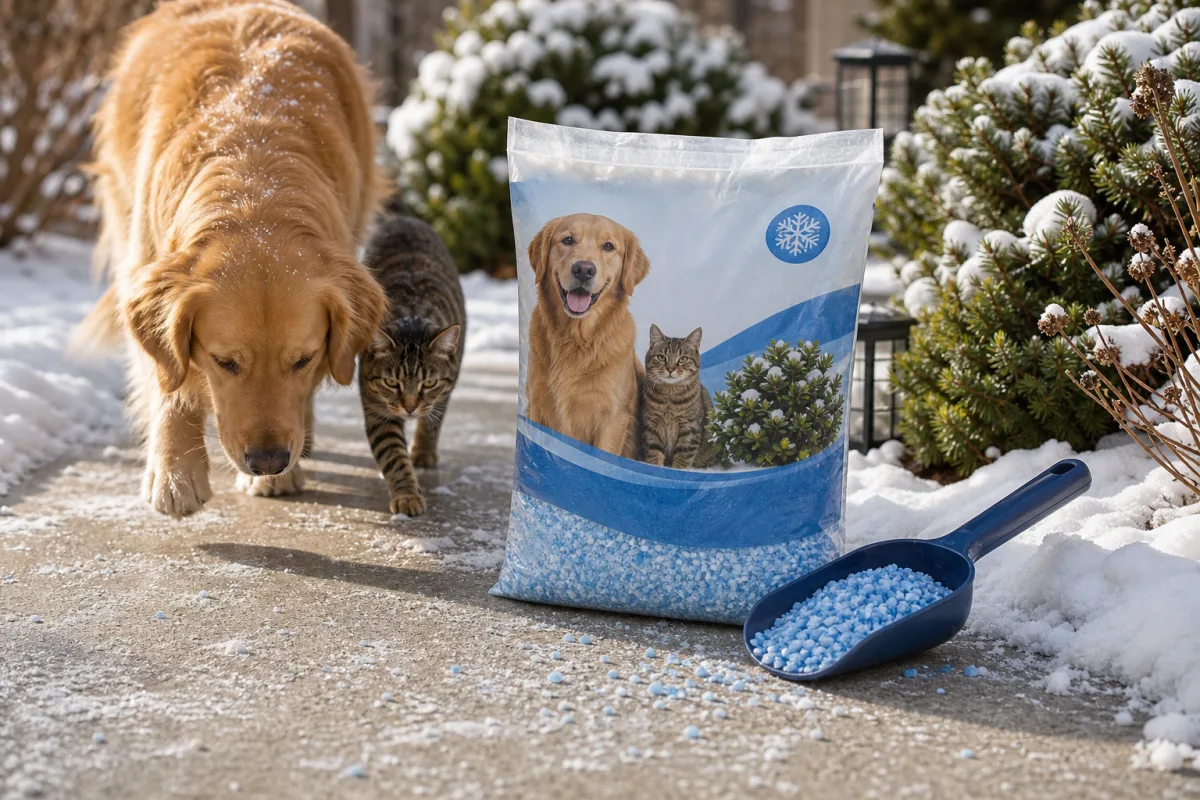
Buying ice melt before a storm is easier when you know what to compare. If you want to protect concrete, reduce pet exposure, or limit runoff near landscaping, start with the product label—not a front-of-bag claim.
The term “pet-safe ice melt” is often marketing language, not a guarantee that a product is harmless. Look instead for products marketed for pet-conscious use or with specific pet-use guidance, and follow all label directions. No deicer is risk-free in every setting.
What “Safer” Ice Melt Means for Concrete, Pets, and Plants
A product may be a better fit for one concern without being the best choice for every concern. Compare the package information in these practical categories:
- Concrete and surface compatibility: Check whether the product is labeled for concrete, asphalt, pavers, steps, or other surfaces. Note restrictions for new, cracked, chipped, sealed, painted, or otherwise damaged concrete.
- Pet-use guidance: A product may be formulated or labeled to reduce certain paw-contact concerns compared with conventional deicers. That does not mean pets should ingest granules or have unrestricted access to treated areas.
- Plant and runoff cautions: Deicers and salty meltwater can affect grass, shrubs, garden beds, soil, and drainage areas. Look for directions about vegetation, drains, and water-sensitive locations.
Formulations, directions, and surface limitations vary by brand and region. Rely on the specific package label and current manufacturer documentation rather than assuming all products in the same ingredient or marketing category perform the same way.
Where to Buy Ice Melt Locally
Local shopping is usually the best option when you need ice melt quickly. Common sources include:
- Home improvement stores
- Neighborhood hardware stores
- Garden centers and nurseries
- Farm and feed stores
- Supermarkets and regional grocery stores
- Big-box retailers
- Pet-supply stores with seasonal outdoor products
Store selection changes throughout the season. Check a retailer’s online inventory tool when available, then call ahead if you need a specific product. Ask whether the store has a deicer with concrete-use directions, pet-use guidance, or instructions for use near landscaping.
Where to Buy Ice Melt Online
Online retailers can make comparison shopping easier, particularly when you want to review full labels, product documents, bag sizes, and ingredient information before purchasing. Useful sources include home improvement websites, pet-supply retailers, general retailers, and manufacturer-direct stores.
Online listings may provide:
- Photos of the package label
- Active ingredient details
- Product directions and safety documentation
- Bag size and coverage information
- Pickup, delivery, or local-stock options
- Storage recommendations
Check current delivery eligibility, retailer shipping notices, and expected arrival dates, especially before or during a storm. Before ordering a large bag or several containers, make sure you have a dry, secure place to store them.
Local vs. Online: Which Buying Option Fits Your Needs?
| Buying factor | Local store | Online retailer |
|---|---|---|
| Immediate availability | Best when the item is in stock and weather is approaching | Depends on delivery date or local pickup availability |
| Full-label inspection | You can inspect the package before paying | Review listing photos and documents; confirm they match the current product |
| Pickup options | Often available the same day | May offer store pickup or ship-to-home options |
| Product selection | Can be limited after a storm or late in the season | Often easier to compare brands, sizes, and documentation |
| Bulk sizes | Availability varies by store | May offer larger quantities, but storage and delivery matter |
| Returns or exchanges | Usually simpler if the bag is unopened | Policies and return shipping may vary |
How to Read Ice Melt Labels Before You Buy
The label should guide the purchase decision more than broad claims such as “concrete safe,” “pet safe,” or “eco-friendly.” Look for complete instructions that match the areas you plan to treat.
Check Surface Compatibility
Look for clear statements about use on concrete, asphalt, pavers, wood decking, stairs, and other hard surfaces. Pay attention to warnings involving new or deteriorating concrete, coatings, sealers, and painted surfaces.
A product suitable for one area may not be suitable for every surface around your home. If the package is unclear, contact the manufacturer before using it.
Review Pet and Household Guidance
Read all pet-related directions and warnings, including guidance about paw contact, accidental ingestion, cleanup, and storage. Keep loose granules away from pets and children, and wipe paws after outdoor trips when treated areas have been used.
If a pet ingests granules, shows unusual symptoms, or has substantial exposure, follow the product label and contact a veterinarian or poison-control resource promptly.
Look Beyond Broad Environmental Claims
Terms such as “environmentally friendly” do not replace specific instructions about lawns, plants, soil, drains, or water exposure. Check for plant-related cautions, then compare the labeled application rate and working temperature.
Using more product than directed can leave excess residue and increase runoff without improving results.
| Label detail | Why it matters before purchase |
|---|---|
| Active ingredients | Helps you compare products beyond front-label marketing. |
| Surface-use directions | Confirms whether the product is intended for your driveway, steps, deck, or walkway. |
| Pet-related warnings | Guides handling, paw cleanup, storage, and exposure precautions. |
| Plant and runoff cautions | Helps reduce unnecessary use near landscaping and drains. |
| Temperature range | Indicates the conditions in which the product is expected to work. |
| Application rate | Helps estimate how much to buy and avoid overapplication. |
Match the Product to the Area You Need to Treat
A property may have several treatment areas with different needs. Consider each one before choosing a product.
Driveways and Sidewalks
For broad paved areas, choose a product whose label addresses your surface material and expected temperatures. If concrete has cracks, spalling, or visible damage, follow any additional label restrictions closely.
Front Steps, Entries, and High-Traffic Walkways
Steps and entry paths often need frequent clearing because snow and slush are tracked indoors. Choose a product appropriate for the surface, then remove loosened slush and residue when practical.
Decks and Other Specialized Surfaces
Wood, composite, painted, coated, and decorative surfaces can have different care requirements than concrete. Check both the deicer label and the surface manufacturer’s maintenance guidance before treating these areas.
Paths Near Landscaping
For walkways beside grass, shrubs, flower beds, or gardens, consider where meltwater will flow. Use the minimum effective amount, follow label cautions, and avoid pushing salty slush into planted areas or toward drains.
Questions to Ask a Retailer or Manufacturer
If the package does not answer your questions, ask before buying. A retailer may be able to locate product details, while the manufacturer is the best source for product-specific guidance.
Useful questions include:
- Can you provide the current product label or safety documentation before I buy?
- Is this product intended for concrete, and are there restrictions for new, sealed, cracked, or damaged concrete?
- Which surfaces should not be treated with this product?
- What pet exposure guidance applies if an animal walks through the product or ingests granules?
- Does the manufacturer provide directions for use near lawns, shrubs, garden beds, drains, or water-sensitive areas?
- What temperatures is the product designed to work in?
- What application rate is recommended for ice, light snow, or refreezing conditions?
- How should the product be stored between uses?
Buy the Right Amount and Store It Properly
Estimate the area you expect to treat, then compare it with the package coverage guidance. A small container may be enough for occasional spot treatment on front steps, while a larger bag may make sense for a long driveway or repeated storms.
Buy only what you can use and store properly. Keep ice melt dry in its original sealed bag or container whenever possible. Store it away from pets, children, food items, and areas where spilled granules could be tracked through the home. If the original package is damaged, move the material to a secure, clearly labeled container and keep the directions and warnings with it.
Use Ice Melt in a Way That Reduces Unnecessary Exposure
Careful application can reduce waste, residue, pet contact, and runoff near plants. Follow the product’s directions and these practical steps:
- Shovel or sweep snow first when possible so the product can reach the ice.
- Apply the deicer evenly at the label-directed rate.
- Allow the directed time for melting rather than adding more immediately.
- Remove loosened slush, melted ice, and residue when practical.
- Keep pets away from loose granules and wipe paws after outdoor trips.
- Sweep up tracked-in material and clean footwear before residue spreads indoors.
- Use traction materials when better footing is needed but melting ice is not necessary.
Make a Purchase Plan Before the Next Storm
Before buying pet-safe ice melt or another lower-impact deicer, use this quick checklist:
- What surface will you treat?
- What temperatures do you expect?
- Are plants, lawns, drains, or water-sensitive areas nearby?
- Can pets access the treated area or loose granules?
- How much area do you need to cover?
- Is the product in local stock, available for pickup, or likely to arrive before the storm?
- Do you have dry, secure storage space?
Start by checking local inventory or online availability, then compare the full product label, active ingredients, surface directions, pet-use guidance, application rate, temperature range, and plant or runoff cautions. Choosing a product for the exact areas you need to treat—and using only the amount directed—can help you manage winter ice while reducing avoidable exposure around your home.