Everyday Home Solutions
How to Clean a Garbage Disposal Safely and Get Rid of Odors
Learn how to clean a garbage disposal safely, remove odor-causing residue from the splash guard and drain opening, use proper flushing habits, and recognize signs of a clog or appliance problem.
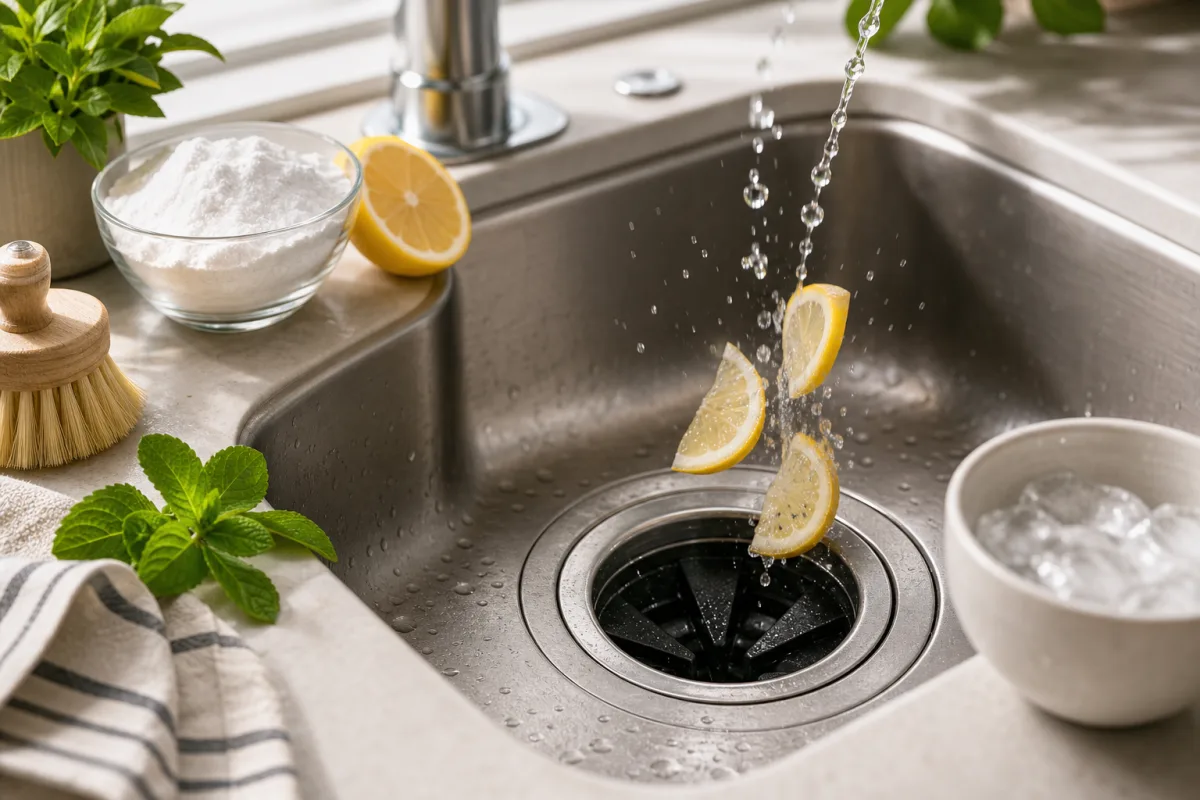
A garbage disposal can develop odors when food residue, grease, and moisture collect around the splash guard, sink flange, grinding chamber, or nearby drain surfaces. In many cases, the smell is not a sign that the appliance has failed—it simply means the accessible parts need cleaning and the unit needs to be used with enough running water.
The safest approach is straightforward: keep hands out of the disposal, clean the splash guard and drain opening, flush the unit correctly, and avoid sending grease or excessive scraps down the drain. If odors persist alongside slow drainage, leaks, humming, or electrical problems, the cause may be in the drain line or the appliance itself.
Start With Garbage Disposal Safety
A garbage disposal contains moving parts and should be treated as an appliance even when the switch is off.
- Turn the wall switch off before cleaning around the drain opening.
- Never put hands or fingers into the disposal.
- Disconnect power at the plug or switch off the circuit breaker before inspecting the unit, removing a visible object, or addressing a jam.
- Use long tongs or pliers only to remove an item that is clearly visible and easy to grip after power has been disconnected.
- Follow the owner’s manual for your model’s reset button and jam-clearing procedure.
- Never mix cleaning products or add cleaners to a drain containing unknown residues.
Do not use your hand to retrieve an object, even if the disposal is unplugged. If an item is not visible or cannot be removed safely with a suitable tool, stop and consult the manufacturer’s instructions or a qualified plumbing or appliance professional.
Where Garbage Disposal Odors Usually Come From
Before adding a deodorizer, remove the residue that is causing the smell. Odors often come from food particles trapped in places that are easy to overlook, especially beneath the flexible rubber splash guard.
Common sources include:
- Food residue on the top and underside of the splash guard
- Grease or oil coating the disposal and connecting drain pipe
- Scraps fed into the unit too quickly or in large quantities
- Insufficient water while the disposal is running
- Buildup in the sink drain, dishwasher connection, or sink overflow opening
The splash guard deserves special attention. Its rubber flaps catch food debris, and the underside can become odorous even when the sink appears clean.
Clean the Splash Guard and Drain Opening
Cleaning the accessible surfaces is usually the most effective first step when you need to clean a garbage disposal that smells bad.
- Turn the disposal off. For closer work around the opening, disconnect power or turn off the circuit breaker.
- Wet the splash guard with warm water.
- Apply a small amount of dish soap to a brush, old toothbrush, or cleaning cloth.
- Scrub the top of the splash guard, then gently clean beneath the rubber flaps.
- Wipe the sink flange and the visible area around the drain opening.
- Rinse the splash guard and sink surfaces thoroughly with warm water.
Do not push a brush, cloth, or other cleaning tool deep into the grinding chamber. The goal is to remove accessible debris, not to reach internal components.
If your splash guard is removable, check the owner’s manual before taking it out. Some models allow removal for cleaning, while others are designed differently.
Flush the Disposal Properly
Water helps carry ground food particles through the disposal and into the drain line. The U.S. Environmental Protection Agency advises using cold water when operating a disposal, and many manufacturers give the same recommendation in their use-and-care guidance.
Use this routine whenever operating the unit:
- Start a steady stream of cold water.
- Turn on the disposal after the water is running.
- Feed only small amounts of appropriate food scraps at a time.
- Keep cold water running while the disposal operates.
- After the grinding sound changes and the food has cleared, allow water to run for several more seconds before turning the disposal off.
Cold water can help keep fats more solid so they are less likely to coat the disposal and nearby pipes. This does not make grease safe to pour down the drain: cooking oil, fat, and grease should be collected in a container and discarded according to local waste guidance.
Deodorize Carefully After Cleaning
Deodorizers can freshen the sink area, but they work best only after you have scrubbed the splash guard and removed visible residue. They cannot fix a clog, leak, or jam.
Ice Cubes
A modest amount of ice may help dislodge light residue inside the disposal. With cold water running, add a small handful of ice and operate the unit normally. Finish with a brief cold-water flush.
Do not overload the disposal with ice, and do not use this method if the unit is humming, jammed, or draining poorly.
Citrus Peels
Small pieces of citrus peel can provide a temporary fresh scent. Use only a small amount while cold water is running, then flush the unit. Large quantities can add unnecessary material and may contribute to buildup.
Baking Soda
Baking soda can be used to freshen the splash guard and drain opening. Sprinkle a small amount around the accessible drain area, let it sit briefly if desired, then rinse with water.
Do not use baking soda, vinegar, bleach, ammonia, acid-based cleaners, or any other household product if chemical drain cleaner or an unknown product is already in the drain. Never combine cleaning chemicals.
What Not to Put Down a Garbage Disposal
A disposal is not a substitute for scraping plates, composting, or disposing of grease properly. Even materials that can be ground may create problems when added in large amounts.
Always check the owner’s manual for model-specific restrictions. In general, avoid or limit the following:
| Material | Why to avoid or limit it |
|---|---|
| Grease, cooking oil, and fat | They can coat the disposal and accumulate in drain pipes. |
| Large quantities of food scraps | They can overwhelm the unit and contribute to slow drainage. |
| Fibrous vegetable scraps | They may tangle around components or resist grinding. |
| Coffee grounds | They can accumulate in pipes and contribute to drain buildup. |
| Bones and hard materials | Some disposal models are not designed to process them. |
| Non-food items | They can jam or damage the appliance. |
Scrape dishes into the trash or compost bin before rinsing them in the sink. This reduces both odor-causing residue and the amount of material entering the drain system.
Avoid These Unsafe Cleaning Practices
Some popular disposal-cleaning methods are unsafe, unhelpful, or likely to make a plumbing problem harder to diagnose.
Avoid:
- Reaching into the disposal to remove an object or clear a jam
- Pouring harsh chemical drain cleaners into the disposal
- Mixing bleach, ammonia, acids, drain cleaners, or other cleaning products
- Using hot water to try to wash grease through the disposal and pipes
- Adding large amounts of ice, citrus peel, or food scraps at once
- Repeatedly running a disposal that hums, is jammed, or drains slowly
Chemical drain cleaners can create splash hazards, react with other products, and complicate later repair work. If there is a clog or mechanical issue, use the manufacturer-approved troubleshooting process or call a professional instead of adding stronger chemicals.
When to Troubleshoot or Call a Professional
A clean, properly functioning disposal should run normally, drain freely, and have no strong recurring odor. Take persistent symptoms seriously.
If the Disposal Hums
Humming can indicate that the motor has power but the grinding mechanism is jammed. Disconnect power before inspection. Use only the jam-clearing method specified by the manufacturer, such as the wrench port provided on some models. Never put your hand inside the unit.
If the Disposal Drains Slowly
Slow drainage may indicate buildup or a clog in the disposal, sink trap, or branch drain. Do not keep running the disposal in an attempt to force the blockage through. If cleaning the splash guard and using normal water flushing does not help, the drain system may need professional attention.
If the Disposal Will Not Turn On
Consult the owner’s manual for reset instructions and verify that the power source is working. Contact a qualified professional if a circuit repeatedly trips, wiring appears damaged, or you are unsure how the unit is connected.
If Odors Return Quickly
A smell that returns soon after cleaning may come from the drain line, dishwasher connection, sink overflow, or another plumbing component. Recurring odors, clogs, leaks, or unusual noises are reasons to arrange plumbing or appliance service.
Keep Odors From Returning
Regular habits are more effective than occasional heavy cleaning. To keep a garbage disposal fresh:
- Clean the splash guard and drain opening regularly.
- Run cold water before, during, and briefly after using the disposal.
- Feed small amounts of suitable scraps gradually.
- Keep grease, oil, fat, and non-food items out of the unit.
- Scrape plates into the trash or compost before rinsing.
- Address slow drainage, leaks, humming, and recurring odors promptly.
Safe maintenance is usually enough to control everyday disposal odors: turn the unit off before cleaning accessible areas, remove trapped residue from the splash guard, and use adequate cold-water flushing during operation. When odor or performance problems continue, focus on the underlying drain or appliance issue rather than masking it with stronger cleaners.
Sources
- U.S. Environmental Protection Agency, “Garbage Disposals”: https://www.epa.gov/recycle/composting-home
- InSinkErator, “Garbage Disposal Care and Use”: https://support.insinkerator.com/app/answers/list
- Plumbing-Heating-Cooling Contractors—National Association, consumer plumbing guidance: https://www.phccweb.org/